What Are the Key Differences?
| Feature | Montessori Education | Traditional Schools |
|---|---|---|
| Classroom Dynamic | Child-centered; students play an active role in learning. | Teacher-led lessons; passive learning. |
| Grouping | Mixed age groups (e.g., 3-6 years old). | Same-age groups (grades). |
| Learning Style | Individualized pace; hands-on Montessori materials. | Standardized curriculum for the whole class. |
Choosing the right learning environment for your child is one of the most important decisions a parent can make. Parents often wonder about the differences between a Montessori education and a traditional classroom educational approach. While both aim to support student learning, the way they accomplish this task is much different.
This post will go into 5 key differences between a Montessori and a traditional education, and why many families are drawn to Montessori for its child-centered approach.
1. Classroom Structure
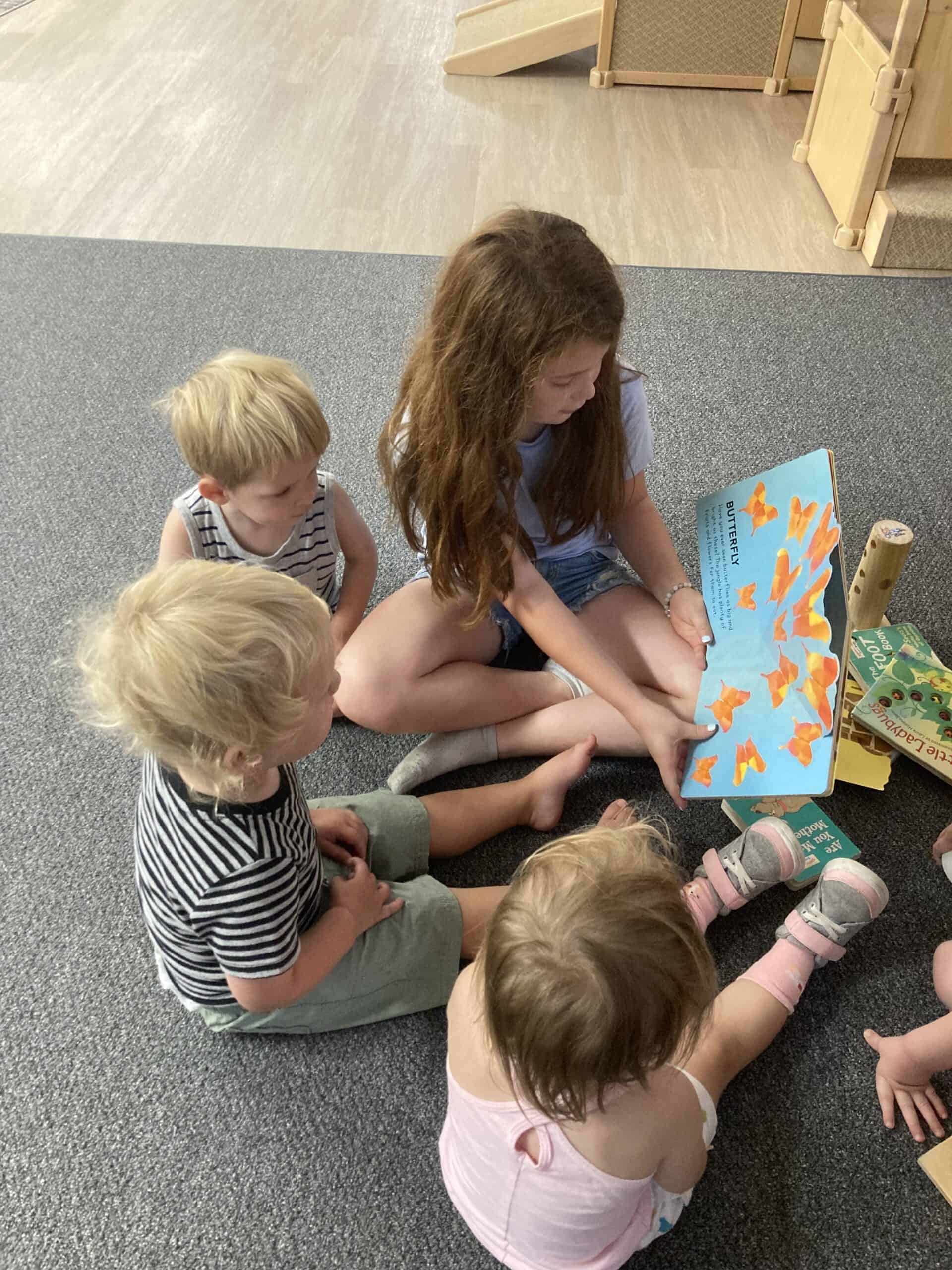
Children engaged in a Montessori-style mixed age learning activity, fostering early literacy in a nurturing environment.
- Montessori Education: Classrooms use mixed age groups. For example, children ages 3–6 learn together in preschool. This allows older students to take on leadership roles, mentor younger peers, and revisit concepts with deeper understanding.
- Traditional Education: Students are grouped strictly by single age or grade level. Traditional education relies on teacher-led instruction where the entire class follows the same curriculum pace.
Why it matters: Multi-age groupings reflect real-world communities and give children opportunities to learn leadership, collaboration, and empathy.
2. Lesson Style
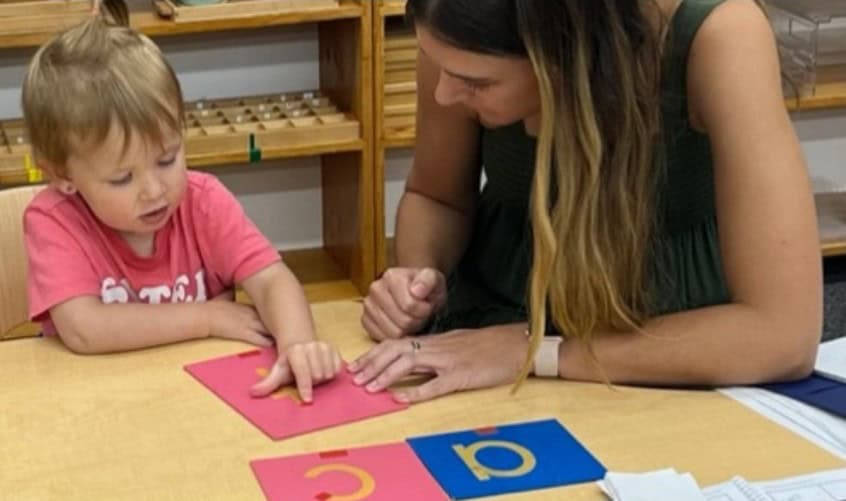
Encouraging early literacy through hands-on activities in a Montessori environment at Mount Clemens, MI.
- Montessori Education: Lessons are individualized based on each child’s developmental stage and interests. Teachers observe carefully, guiding students toward materials that match their readiness.
- Traditional Education: Lessons are delivered in whole-group settings, often designed for the “average” student. Everyone moves forward at the same time, whether they’ve mastered the material or not.
Why it matters: Montessori recognizes that children don’t all learn the same way or at the same pace, giving them freedom to master skills before moving on.
3. Goals and Standards
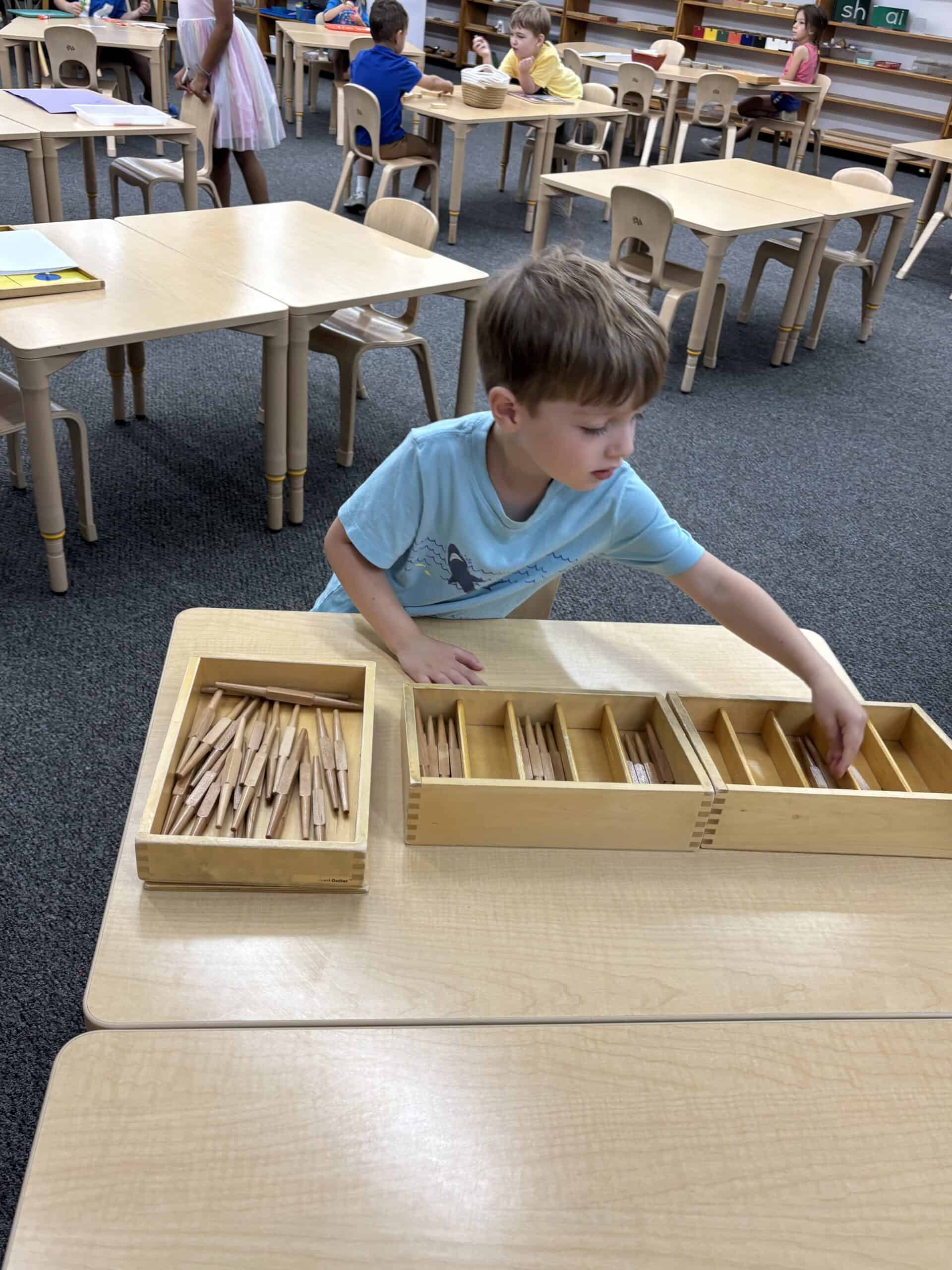
Students are engaged in hands-on learning activities in a calm, well-organized Montessori classroom environment.
- Montessori Education: Students work toward individualized goals that is tailored to their strengths, challenges, and interests.
- Traditional Education: Students follow common core standards or a set curriculum for their grade level.
Why it matters: Montessori children experience greater ownership over their learning, which builds confidence and intrinsic motivation.
4. Pace of Learning
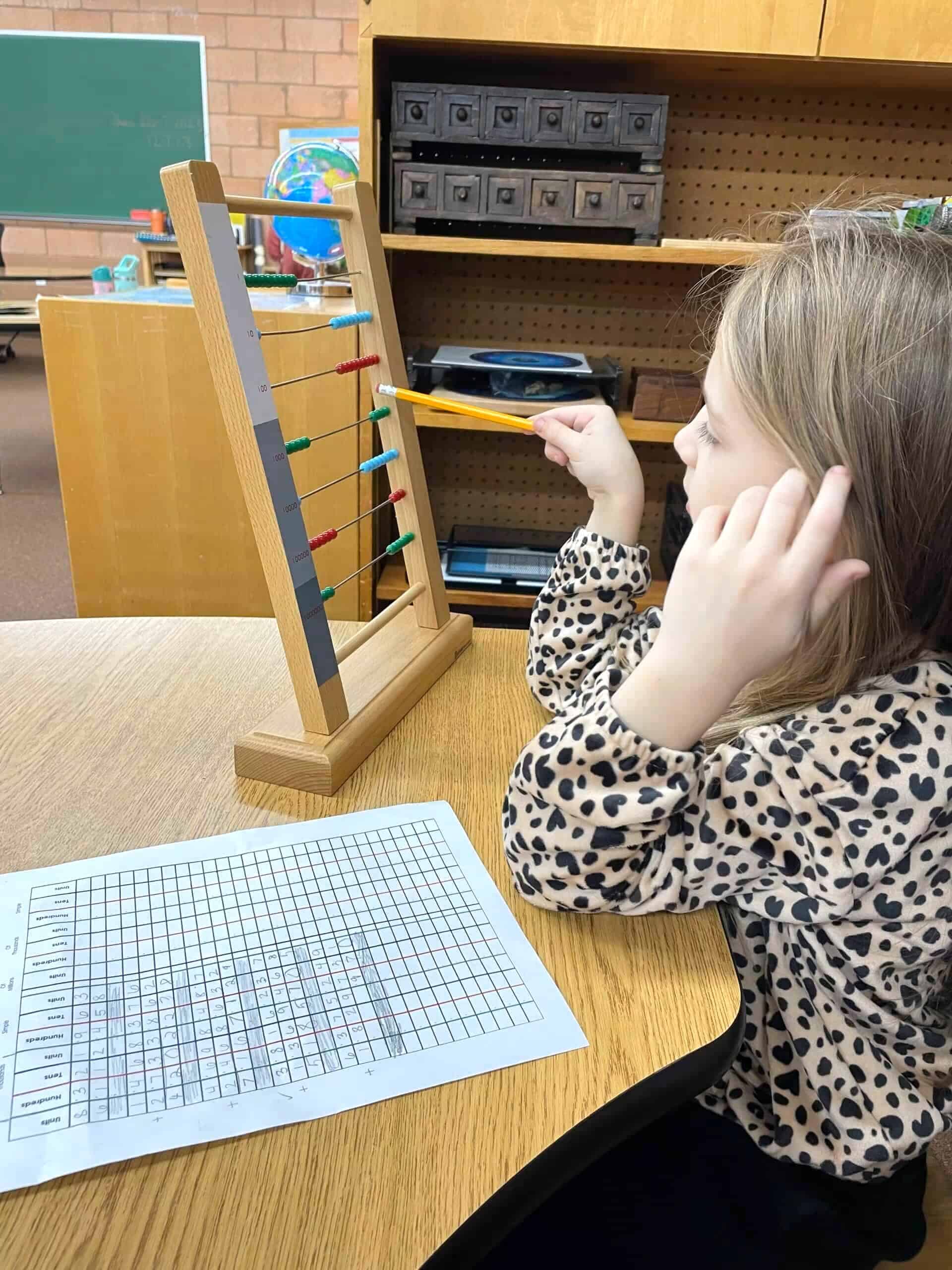
Elementary student using the Montessori Large Bead Frame to solve a math problem on graph paper.
- Montessori Education: Each child sets their own pace of learning. If they need more time on multiplication, they can stay with it. If they’re ready for advanced science, they can move ahead.
- Traditional Education: The class follows a group pace. Children are expected to keep up, and if they fall behind, additional help is given outside regular lessons.
Why it matters: Montessori helps prevent gaps in learning and frustration by meeting the child exactly where they are.
5. Motivation
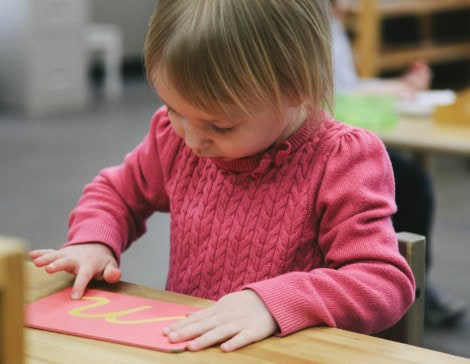
A preschool child focused on sandpaper tracing at a classroom table, highlighting hands-on learning and early childhood education in Mount Clemens, MI.
- Montessori Education: Motivation is internal. Children feel satisfaction from mastering a task, solving a problem, or creating something new. Success is measured by progress, not just grades.
- Traditional Education: Motivation is often external, using grades, rewards, or consequences to encourage performance.
Why it matters: Montessori children develop a lifelong love of learning because they feel ownership and pride in their progress.
 The Montessori Difference
 The Montessori Difference
While traditional classrooms can provide structure and consistency, Montessori classrooms offer a more personalized, holistic approach that nurtures independence, leadership, and confidence.
Make sure to check out our next post entitled “Beyond the Desk: What Traditional Schools Get Wrong (and Montessori Gets Right)” for additional information!
Have Questions? We Would Love to Hear from You!
At Montessori Stepping Stones in Macomb County, Michigan, we believe that when children are given freedom within limits, guidance from trained teachers, and a prepared environment filled with hands-on materials, they naturally flourish.
Check out our Frequently Asked Questions page for additional information!