
Building a Strong Foundation: Montessori Infant and Toddler Care
Maria Montessori once wrote that “[t]he greatness of the human personality begins at the hour of birth.” Over a century later, neuroscience confirms what she observed: the first three years of life are the most crucial period for shaping a child’s lifelong learning, relationships, and confidence. During this stage, children possess what Montessori called the absorbent mind – an incredible capacity to take in information from their surroundings and learn without effort.
You don’t need to give a baby instructions on how to crawl or walk. They learn naturally through exploration, observation, and interaction. Montessori infant and toddler programs are built around this truth. By designing an environment that nurtures curiosity, fosters independence, and supports emotional security, we help children build the foundation for a lifetime of growth.
The “Prepared Environment”: What to Look For
Montessori believes that children should live in an environment of beauty, and this principle is at the heart of every well-designed infant and toddler classroom. Spaces are filled with natural light, low shelves, and child-sized furniture that invite exploration and independence.
Every material is intentional. Rattles encourage grasping and strengthen little hands. Mirrors promote self-awareness. Simple puzzles refine coordination and concentration. Most importantly, children are free to roll, crawl, and walk at their own pace, building physical strength and confidence. Restrictive devices like bouncers or high chairs are avoided because they limit movement and exploration.
This focus on the prepared environment is a cornerstone of Montessori education. (Learn more from Association Montessori Internationale) It allows even the youngest learners to participate actively in their development instead of passively receiving instruction.
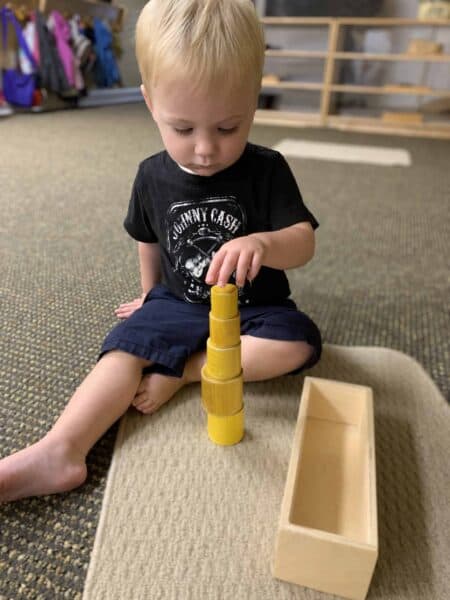
A student focuses on visual discrimination of size using the Yellow Knobless Cylinders.
Love and Trust
Montessori often emphasized that love is the most potent influence on a child’s development. Emotional security is essential because babies and toddlers thrive when they feel safe, loved, and respected.
Teachers in a Montessori setting build deep, caring relationships with each child, providing consistent warmth and support. Predictable routines for eating, sleeping, and playing help children know what to expect, which creates a sense of safety and trust. This emotional foundation shapes how children explore their environment, learn new skills, and build relationships throughout their lives. Experts at the Child Mind Institute also highlight the critical role secure attachment plays in early brain development and future learning.
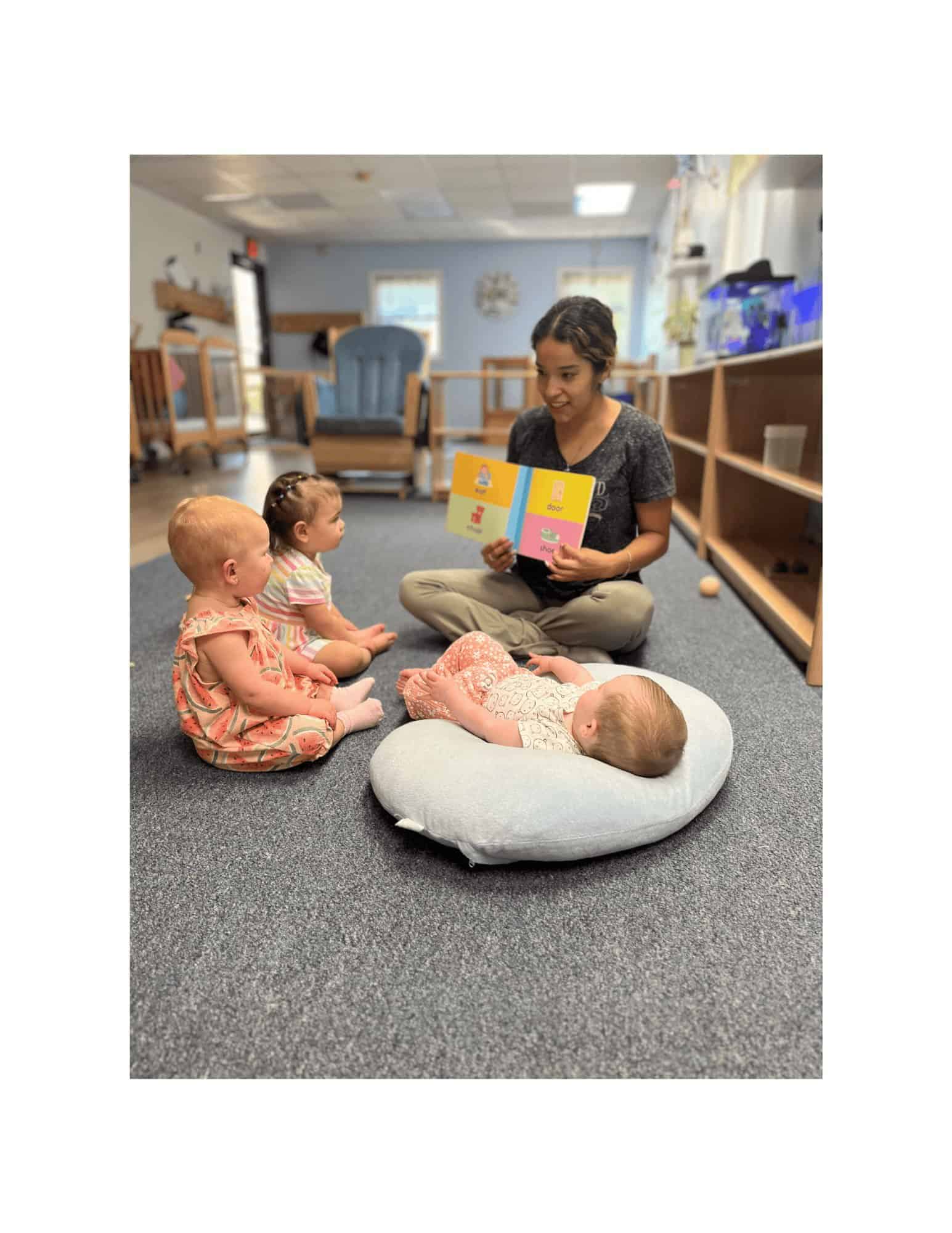
Nurturing the ‘Absorbent Mind’ from day one. Our infant program focuses on language development and building a sense of wonder through early storytelling.
Encouraging Independence
Montessori reminded us to never help a child with a task they feel they can succeed at on their own. This idea drives the daily routines of infant and toddler classrooms, where children are supported in doing for themselves as much as possible.
Even babies are encouraged to hold their own bottles and begin self-feeding with soft foods. Toddlers practice dressing themselves, washing their hands, and helping care for their environment. Each small act of independence builds self-esteem and teaches children that they are capable contributors to their world. Over time, these moments of success create confident learners who approach new challenges with curiosity rather than hesitation.
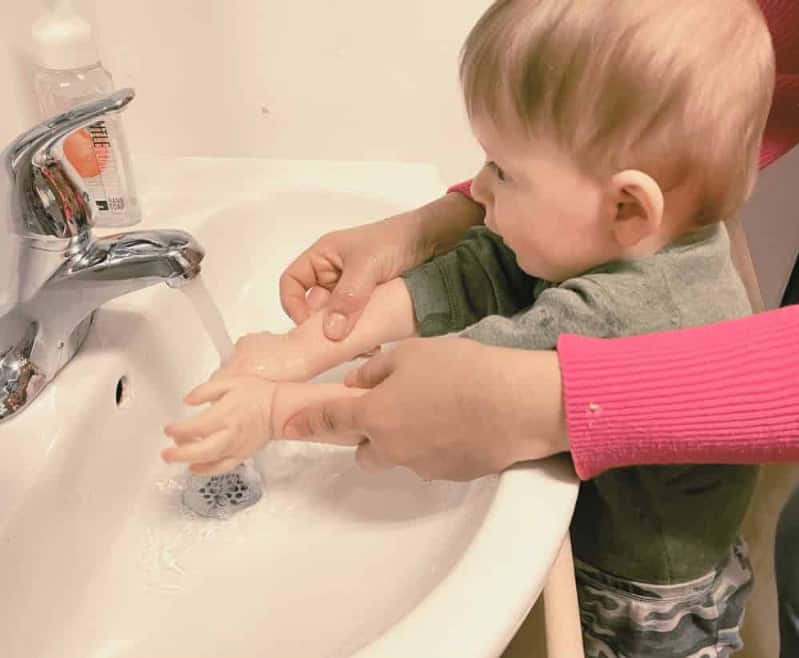
Independence starts early! We take the time to teach toddlers skills like hand washing step-by-step, building their confidence and self-care abilities.
Supporting the Absorbent Mind: Curiosity in Action
Montessori described the absorbent mind as one that welcomes everything, puts everything in its place, and awakens the power of imagination. During the infant and toddler years, the brain is developing at an astonishing pace, and every experience shapes how children think, feel, and learn.
Montessori classrooms are filled with sensory-rich opportunities that stimulate curiosity and support cognitive growth. Songs, stories, and conversations nurture language development and lay the foundation for literacy. Exploring textures, shapes, and sounds engages all five senses. Gross and fine motor activities strengthen neural connections while supporting physical coordination. The American Academy of Pediatrics emphasizes that these early experiences have a lasting impact on brain development and future academic success.
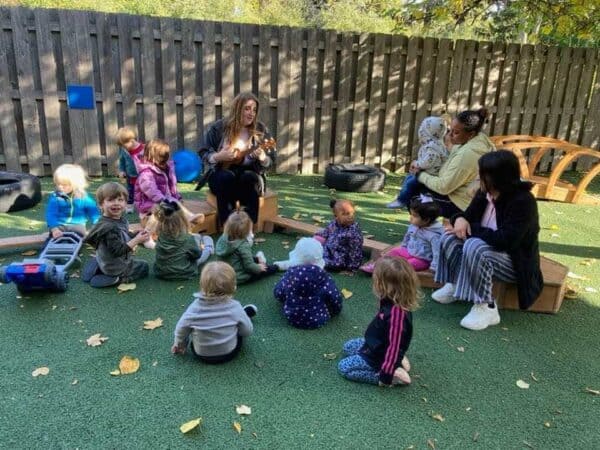
Music and fresh air are daily staples of our Montessori toddler program, nurturing language development and social connection.
Continuity of Care and Education
Many Montessori schools offer programs that begin in infancy and continue through elementary or even middle school. This continuity provides children with a stable, consistent environment and educators who understand their history, needs, and strengths. Montessori described this as giving children the roots of responsibility and the wings of independence – a combination that allows them to grow with confidence and curiosity.
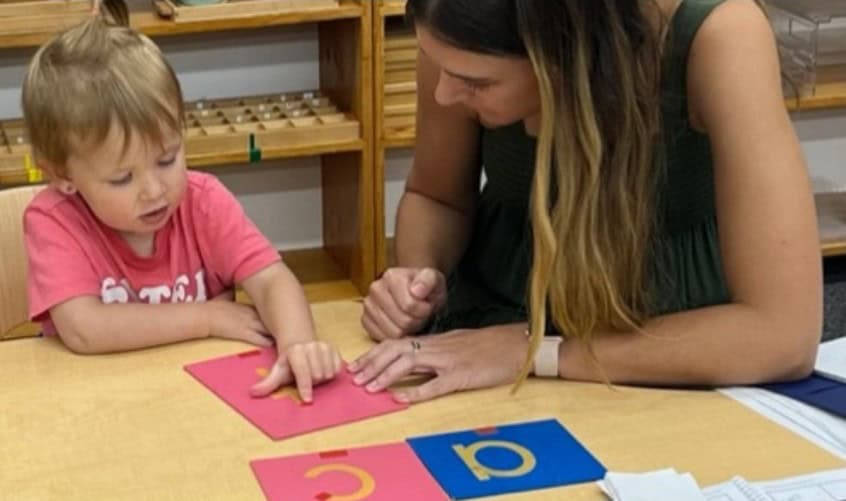
Encouraging early literacy through hands-on activities in a Montessori environment at Mount Clemens, MI.
Why Choose a Montessori Infant Program in Macomb County?
The first three years of life are a time of extraordinary potential. When we provide an environment that nurtures curiosity, builds emotional security, and fosters independence, we lay the foundation for a lifetime of learning.
📚 Further Reading & Resources
Interested in Learning More?
At Montessori Stepping Stones, we believe every child deserves a prepared environment designed to meet their needs from the very start. If you’d like to see how we support even the youngest learners, contact us to schedule a tour and experience the Montessori difference for yourself.