What is a Montessori Education?
Montessori is an educational philosophy developed by Dr. Maria Montessori over 100 years ago. Dr. Montessori created this philosophy based upon respecting the natural development of the child. For example, she believed in a whole-child approach that nurtures independence, curiosity, and a lifelong love of learning. At Montessori Stepping Stones in Mount Clemens, we apply this whole-child approach to nurture independence and curiosity in children across Macomb County.
Key Principles of Montessori
Follow the Child
Montessori teachers observe closely and offer lessons when a child is ready. This principle is not based on an age or a strict schedule. Instead, children are given the freedom to choose meaningful work that builds self-confidence and self-motivation.
Prepared Environment
Classrooms are calm, welcoming spaces with hands-on materials designed to foster their independence.
Hands-On, Purposeful Learning
From pouring water to building words with moveable letters, Montessori materials are designed to help children understand concepts through movement and experience.
Mixed-Age Classrooms
Children learn in multi-age communities. For instance, at Montessori Stepping Stones, this includes: infants and toddlers, preschool, kindergarten, elementary, and middle school. Younger children learn by watching older ones, and older students grow as leaders and mentors.
Independence and Responsibility
Montessori children learn to care for themselves, each other, and their environment.
Montessori vs. Traditional Schooling: What is the Difference?
If you are researching educational options for your child, here is how a Montessori education at Montessori Stepping Stones compares to traditional schooling in Macomb County:
| Montessori Education | Traditional Education |
|---|---|
| Child is the focal point (exploring) | Teacher is the focal point (lecturing) |
| Individualized learning paths | Standardized curriculum for everyone |
| Freedom of movement in the classroom | Students remain seated at desks |
| Self-correction through specialized materials | External correction by the teacher |
| Mixed-age communities (leadership growth) | Same-age classrooms |
For additional information on how Montessori differs from public education, please check out this blog post.
The Long-Term Benefits of a Montessori Education
Many parents choose Montessori because of the calm classrooms and beautiful materials, but the real value lies in what children take with them when they leave. Research and decades of observation show that this method offers distinct advantages that last a lifetime.
Fosters Genuine Independence
“Help me to do it myself” is the unspoken motto of every Montessori child. By allowing children to choose their work, prepare their own snacks, and care for their environment, they develop a deep belief in their own capabilities. This self-reliance translates into a confident child who isn’t afraid to try new things.
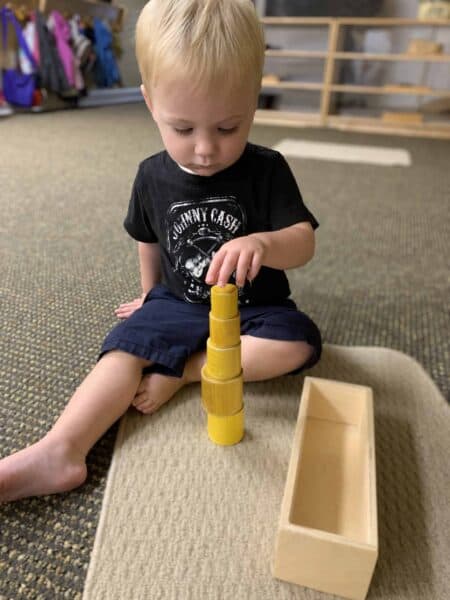
A student focuses on visual discrimination of size using the Yellow Knobless Cylinders.
Develops Strong Social and Leadership Skills
In our mixed-age classrooms, social development happens naturally. Older children solidify their knowledge by teaching younger peers, developing patience and leadership skills. Younger children, in turn, feel supported and eager to reach the next level. This community environment teaches empathy, conflict resolution, and collaboration far better than a traditional single-age classroom.
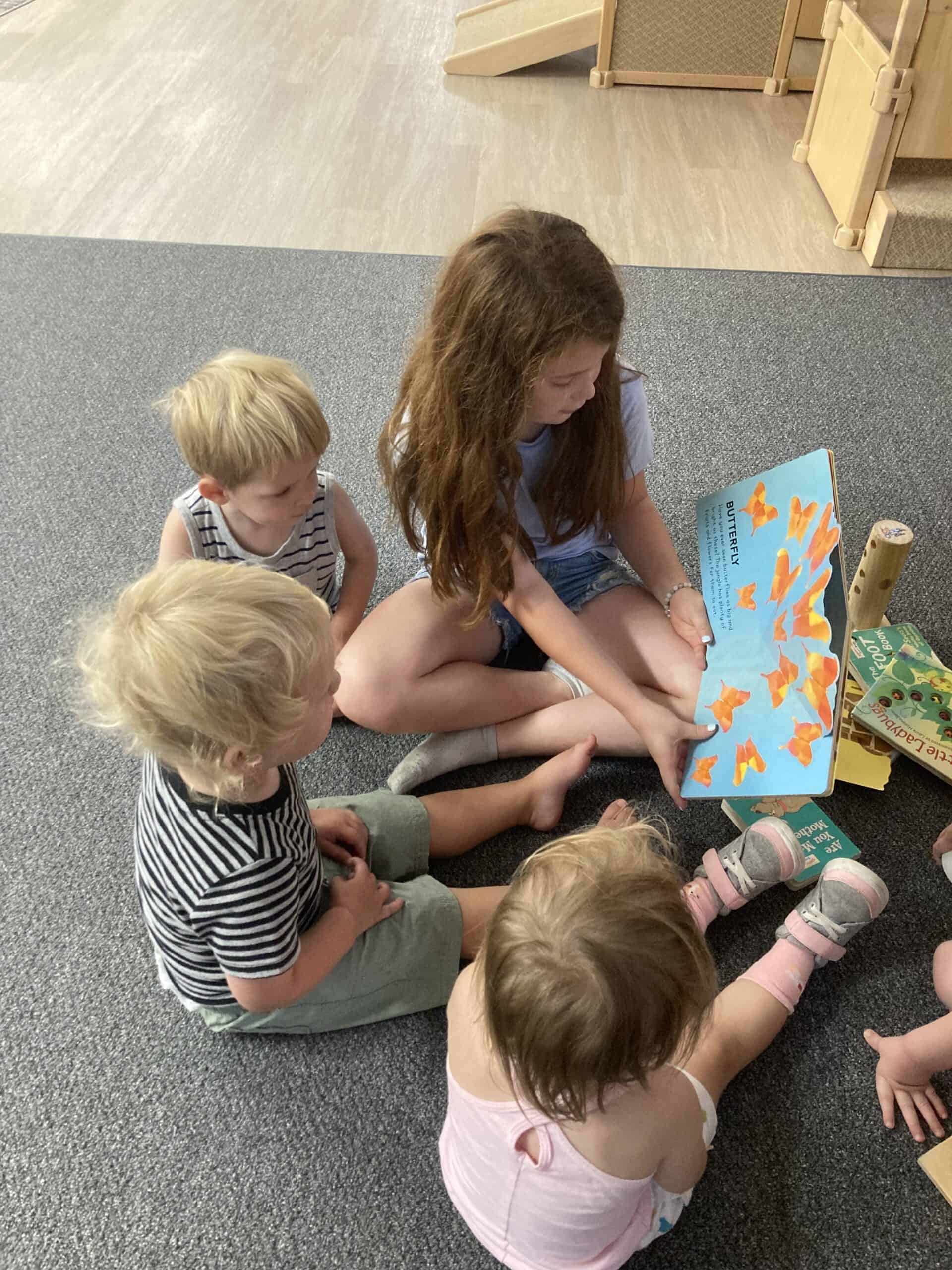
At Montessori Stepping Stones, our classrooms are designed to foster a love for reading and exploration through a consistent, child-led environment.
Cultivates a Lifelong Love of Learning
Because Montessori education is based on following the child’s interests rather than a standardized curriculum, learning never feels like a chore. Children are driven by intrinsic motivation – the desire to learn for the sheer joy of discovery – rather than working for grades or gold stars. This curiosity remains with them long after they graduate.
Builds Executive Function and Self-Discipline
Montessori students have freedom, but it is “freedom within limits.” They must choose a task, complete it, and clean it up before moving on. This daily practice builds strong executive function skills: the ability to focus, plan, manage time, and control impulses. These are the critical skills children need for success in higher education and future careers.
Discover the Montessori Difference
The best way to understand Montessori is to see it in action. We invite you to observe a classroom in Mount Clemens, MI and see the difference for yourself!