
Montessori Infant Toddler Programs vs In-Home Childcare: What Families Should Know
Choosing care for your infant or toddler is one of the most important decisions your family makes. You want your child to feel safe, loved, and secure.
Some families consider an in-home childcare because it seems intimate and convenient, and other families explore Montessori infant toddler programs because they want something more intentional. While both options can provide care – they are not the same experience. Understanding the differences can help families make a choice that aligns with their values and long-term goals for their child.
The First Three Years Matter
From birth to age three, the brain develops at a rapid pace. Neural connections form based on movement, language exposure, emotional regulation, and daily experiences. Montessori education recognizes this period as foundational, not preparatory.
A Montessori infant toddler program is designed specifically around this stage of development. It is not simply childcare with toys. It is a carefully prepared environment guided by child development science and respectful caregiving practices.
Key Differences: Montessori vs. In-Home Care
1. The Environment: Intentional vs. Convenient
Montessori Infant Toddler Programs
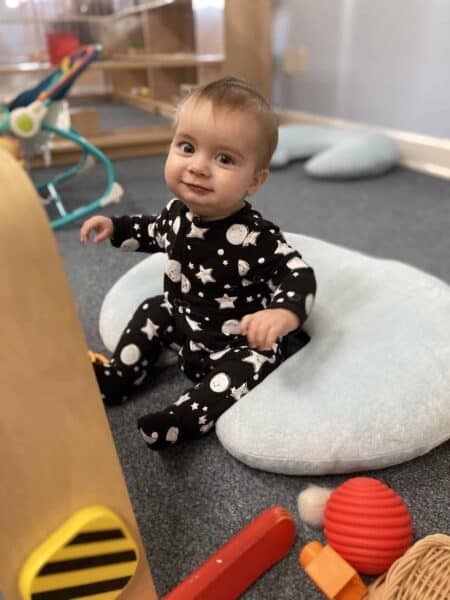
Our peaceful infant environment allows infants to explore their world through early sensory play and individualized care.
Montessori environments are designed for independence and movement. Low shelves, child-sized furniture, mirrors, and prepared materials allow children to explore freely and safely. Every object has a purpose and supports coordination, concentration, and autonomy.
In-Home Childcare
In-home programs often operate within a family living space. While warm and familiar, these environments are typically adapted for adult living rather than child development. Toys and activities may be overstimulating or not developmentally sequenced.
The difference is not warmth or care. It is intention.
2. Caregiving: Developmentally Guided vs. Logistically Managed
Montessori Infant Toddler Programs
Care routines such as diapering, feeding, and dressing are treated as learning opportunities. Adults slow down, communicate clearly, and invite participation. Children are respected as capable individuals, even before they can speak.
In-Home Childcare
Care routines are often completed efficiently to manage group needs. While children are cared for, they may be passively assisted rather than actively engaged in the process.
Montessori focuses on building trust, autonomy, and early self-confidence through everyday moments.
3. Learning Through Movement and Practical Life
Montessori Infant Toddler Programs
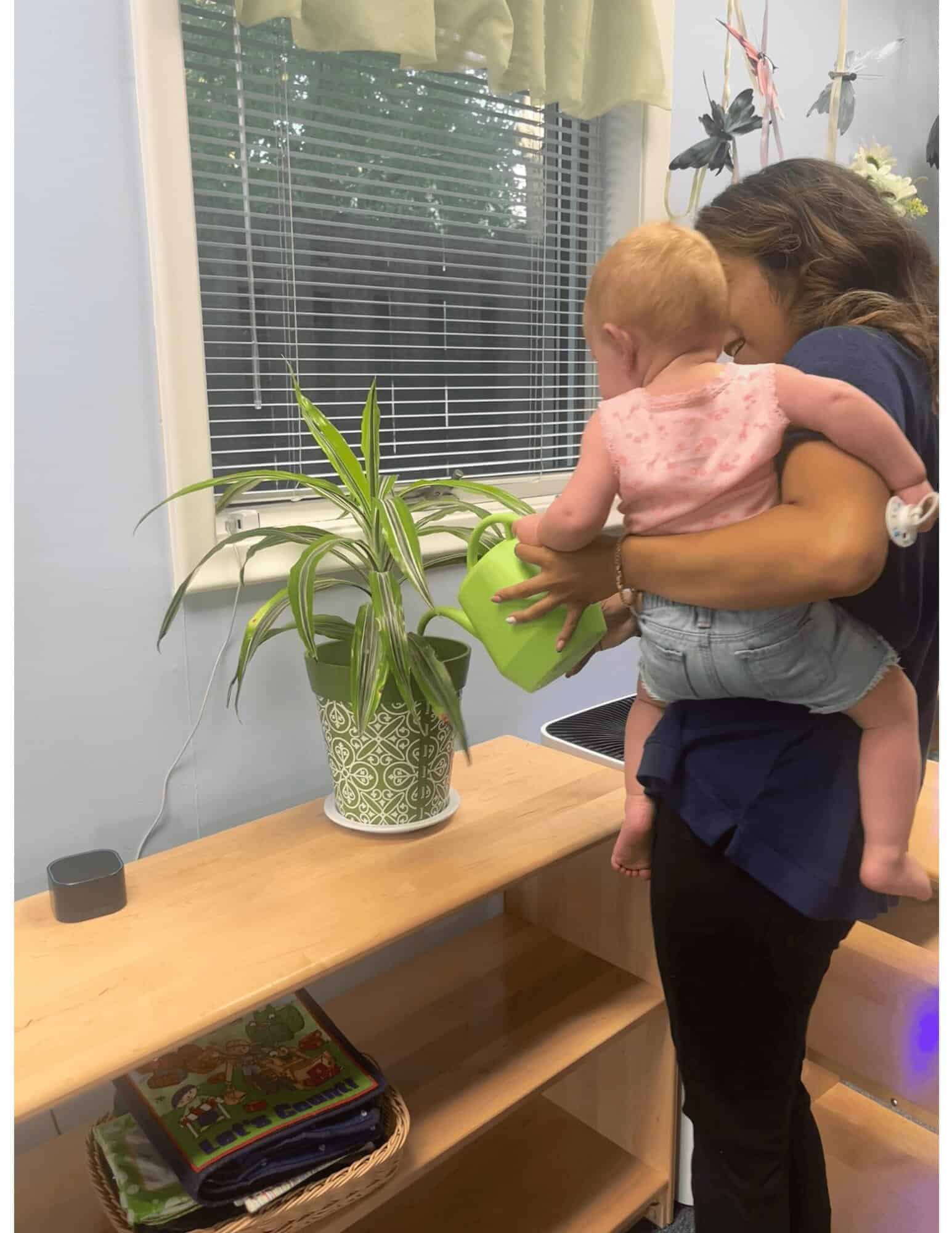
Practical Life in action! Even our toddlers learn responsibility and care for their environment by helping tend to our classroom plants.
Children pour, carry, wipe, climb, push, pull, and repeat tasks. Practical life is central, not supplemental. Movement is encouraged because it directly supports cognitive development.
In-Home Childcare
Learning may rely more heavily on toys, containers, swings, or seated activities. Movement is often limited by space or safety concerns.
Montessori recognizes movement as essential to brain growth, not something to manage or restrict.
4. Social Development and Emotional Regulation
Montessori Infant Toddler Programs
Children learn to observe peers, wait, communicate needs, and begin social interaction at their own pace. Teachers model calm, consistent responses and help children co-regulate emotions.
In-Home Childcare
Emotional guidance varies based on caregiver training and group dynamics.
Montessori environments intentionally support early emotional literacy and self-regulation.
5. Consistency, Training, and Philosophy
Montessori Infant Toddler Programs
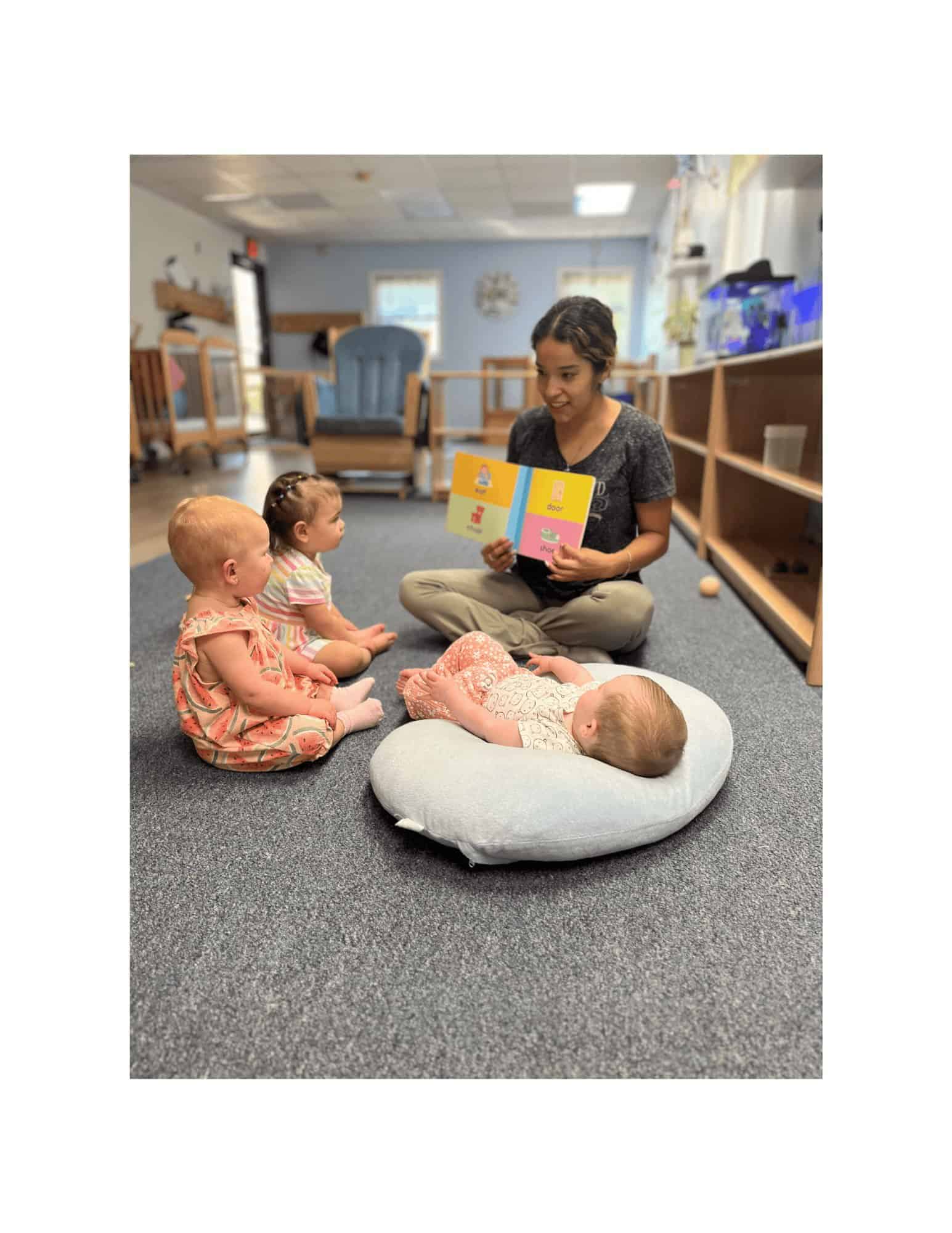
Nurturing the ‘Absorbent Mind’ from day one. Our infant program focuses on language development and building a sense of wonder through early storytelling.
Teachers are trained in Montessori philosophy and child development. The approach is consistent across classrooms, routines, and expectations. Families know what the program values and how children are supported. There are always multiple teachers in the program all helping each other, so no one feels overwhelmed or alone. In our program, there are also cameras to constantly monitor your child’s safety.
In-Home Childcare
Quality varies widely. Some caregivers are nurturing and experienced. Others may lack formal training in early childhood development. The approach often depends on the individual rather than a guiding philosophy.
Montessori programs offer predictability and intentionality that extend beyond one caregiver’s personal style.
Long-Term Impact
Studies show that children who experience Montessori infant toddler environments often develop strong independence, concentration, communication skills, and confidence. They are accustomed to being respected, trusted, and capable. These qualities carry into preschool, elementary years, and beyond.
In-home childcare can meet a family’s needs for flexibility and familiarity. Montessori infant toddler programs meet a child’s need for intentional development during a critical window of growth.
Choosing What Is Right for Your Family
There is no one perfect choice for every family. What matters most is understanding what each option truly offers. Montessori infant toddler programs are not simply caregiving. They are a foundation built on respect, science, and trust in the child’s natural drive to grow.
For families seeking an environment that nurtures independence, emotional security, and early learning through everyday life, Montessori offers something uniquely powerful.
Still Deciding on the Right Care?
Choosing childcare is one of the biggest decisions a family makes. We invite you to tour our classrooms, meet our trained teachers, and see if Montessori Stepping Stones is the perfect fit for your child’s needs.